What is the primary function of this Double-Head Automatic Label Peeling Machine?
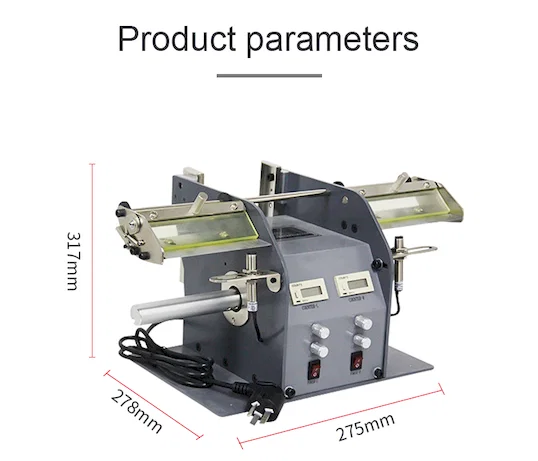
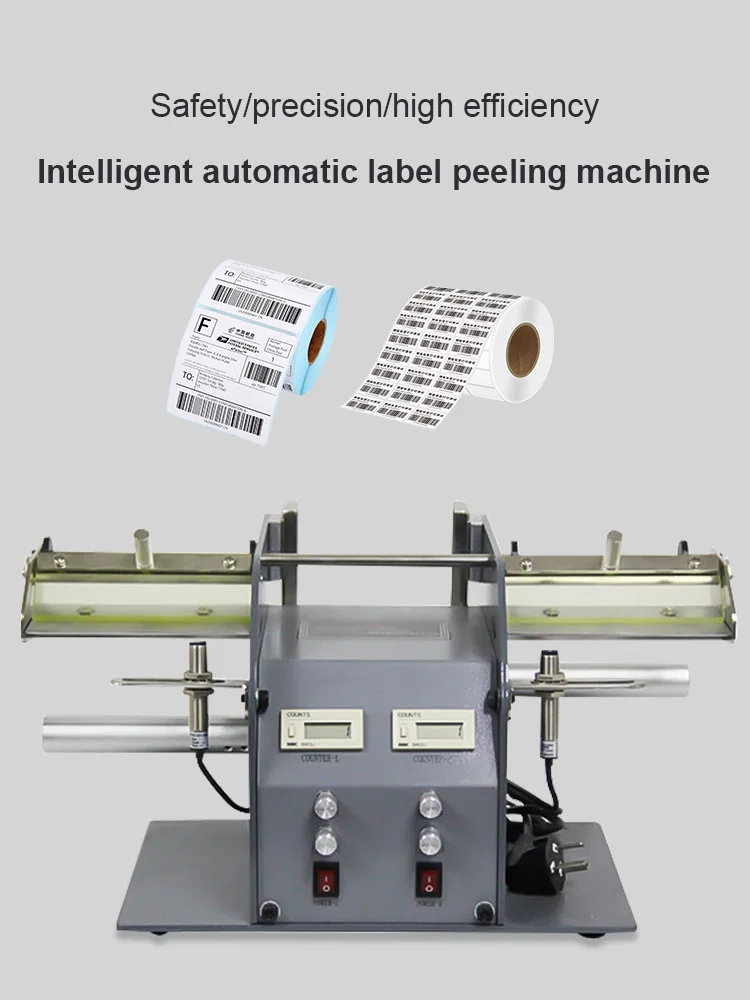
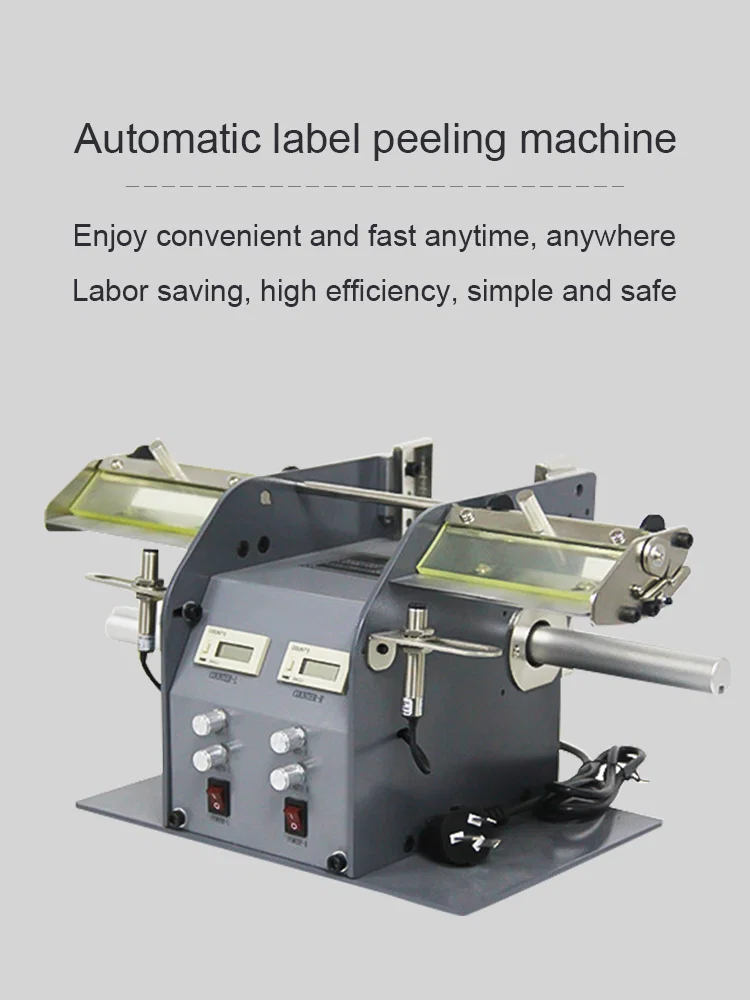
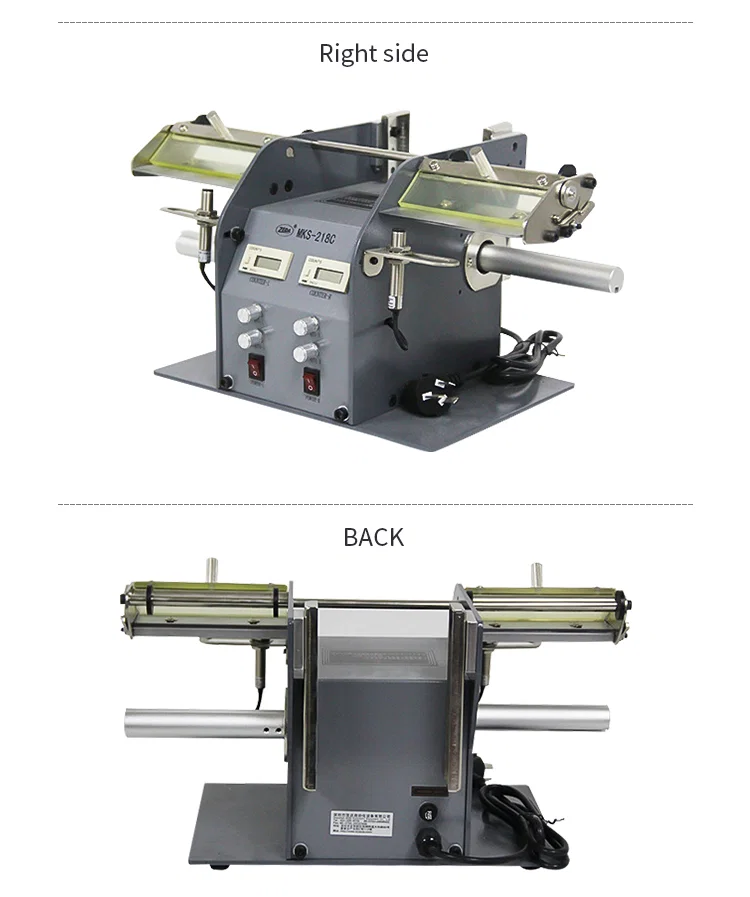
This machine is designed for fully automatic label peeling and cutting, specifically handling thermal paper, barcodes, and various stickers. Its dual-head design allows for efficient separation of the label from its backing liner, preparing it for precise application. It streamlines the process of dispensing labels for industrial packaging, logistics, and product identification, significantly improving paste quality and consistency.
What label sizes and materials can this machine handle?
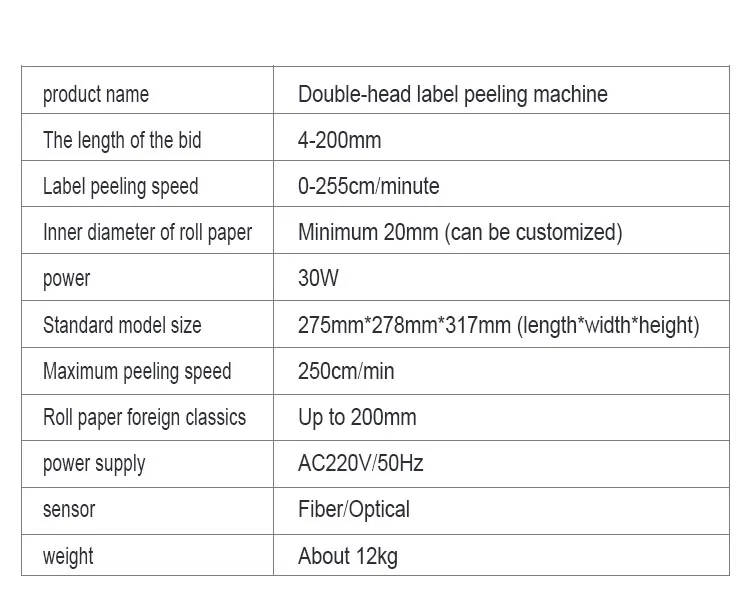
The machine is highly versatile, capable of processing labels with an adjustable length from 4mm to 200mm (up to 8cm). It is engineered to work with thermal paper labels, standard adhesive stickers, and barcode labels. The adjustable settings ensure compatibility with a wide range of label rolls used in industrial and commercial settings, making it suitable for diverse product labeling needs.
How fast is the 255cm/min operation speed, and what are its benefits?
With a high-speed operation of 255 centimeters per minute, this label peeler significantly boosts production throughput. This speed translates to efficient, high-volume label dispensing, reducing bottlenecks in packaging and assembly lines. The benefit is a substantial reduction in manual labor time and cost, while maintaining consistent, high-quality label presentation for application.
What are the key advantages of the double-head design?
The double-head design offers enhanced reliability and efficiency. It provides redundancy and stability in the peeling process, ensuring smoother operation and reducing the chance of jams or mis-feeds. This design is particularly beneficial for continuous, high-demand operations, as it improves machine durability and ensures a more consistent label feed for automated or manual application systems.
How does this machine improve paste quality and reduce labor?
By automating the precise peeling and cutting process, the machine eliminates manual handling errors such as misalignment, wrinkling, or adhesive contamination. This results in superior paste quality with every label. Automating this repetitive task frees up workers for higher-value activities, drastically cuts labor costs, minimizes fatigue-related errors, and increases overall production line efficiency and output.
 English
 Chinese
 Russian
 French
 Spanish
 Arabic
 German
 Dutch
Dutch Portuguese
 Italian
 Turkish
 Korean
 Japanese
 Thai
Thai Czech
Czech Traditional Chinese
 Indonesian
 Vietnamese
 Hungarian
 Malay
Malay Swedish
 Finnish
 Danish
 Norwegian
 Polish
 Greek
Greek