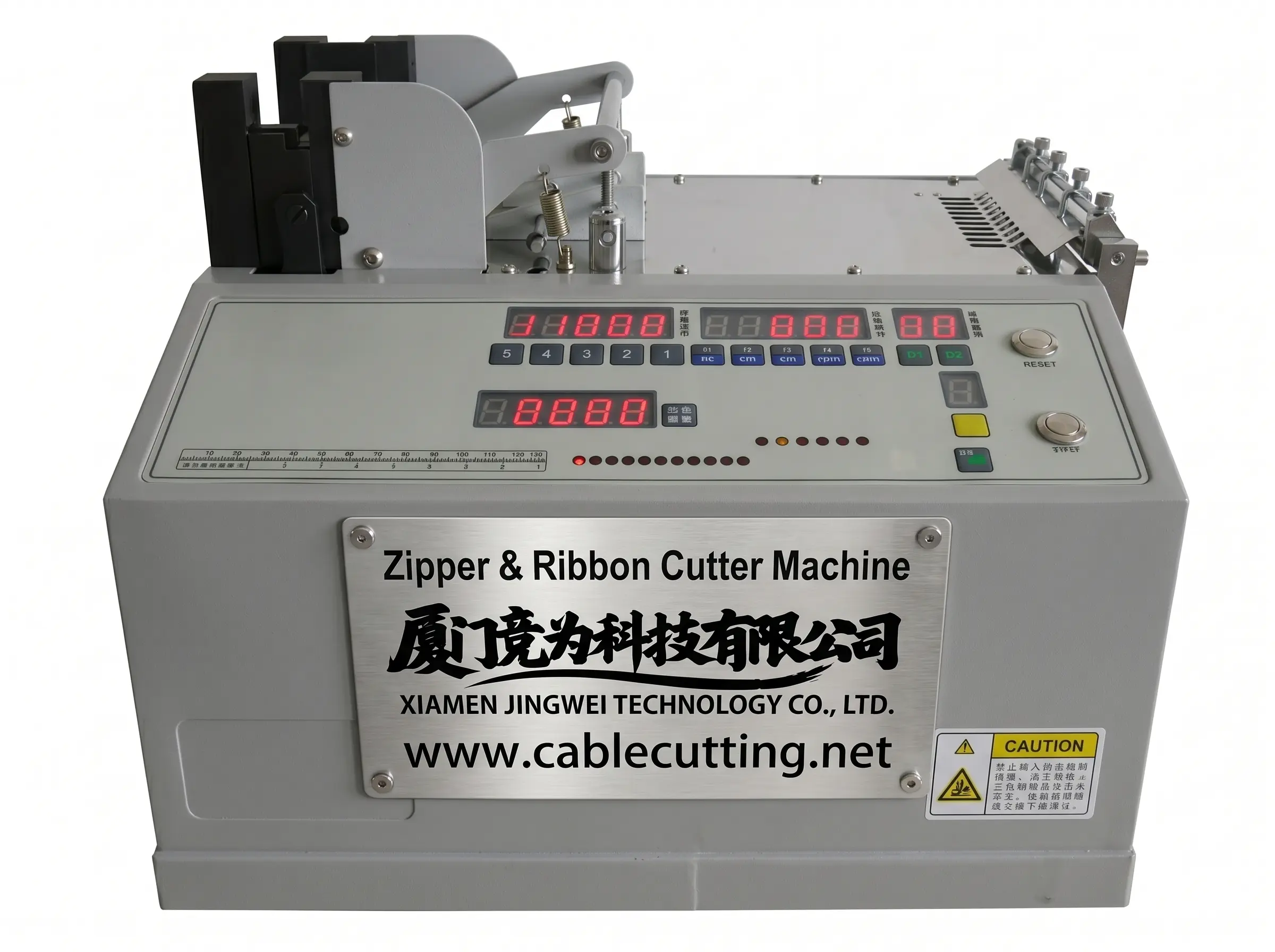
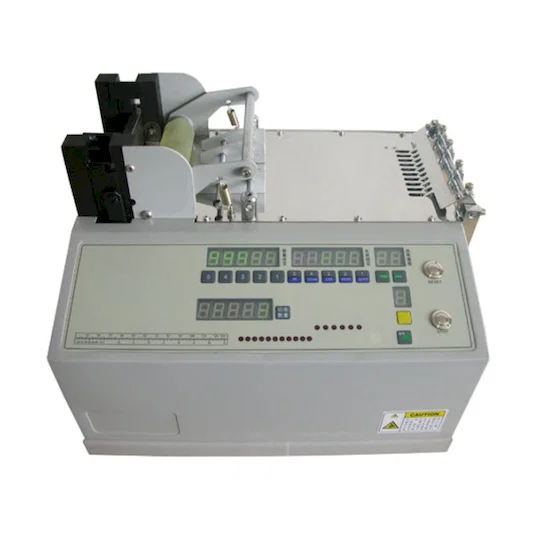
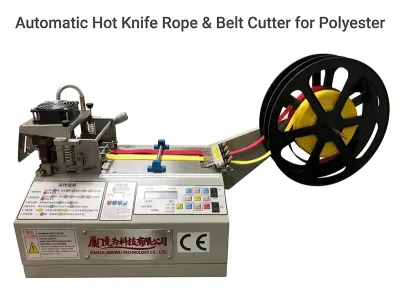
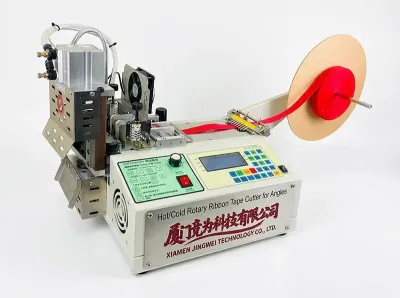
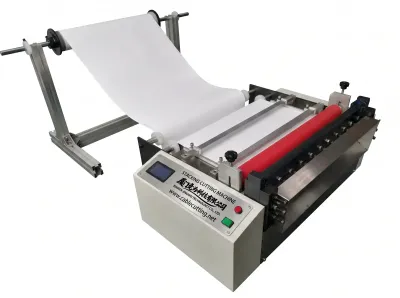
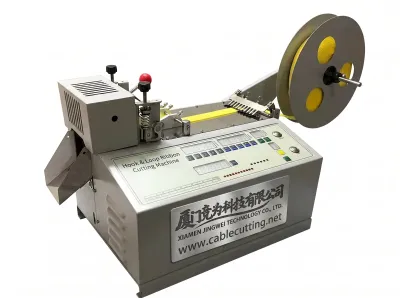
What is the primary function of the WPM-850 Automatic Zipper & Ribbon Cutter Machine?
The WPM-850 is an industrial-grade cold knife cutting machine designed for high-precision, high-speed cutting of zippers, ribbons, computer tapes, and cable harnesses. Its primary function is to automate the cutting process, delivering up to 120 neat, clean cuts per minute without fraying or melting the material edges, which is essential for efficient cable harness manufacturing and textile processing.
What are the key specifications for cutting length and material width?
This machine offers exceptional versatility with a programmable cutting length range from 1mm to 99999mm, allowing for both very short and extremely long cuts from a single machine. It accommodates materials with a maximum width of 110mm. This wide range makes it suitable for diverse applications, from delicate ribbons to wider zipper tapes and cable bundles.
What is the advantage of using a 'cold knife' cutting system?
The cold knife cutting system uses a sharp, unheated blade to slice through materials. This prevents the thermal melting or sealing of synthetic fibers (like nylon or polyester in zippers and ribbons), ensuring a neat, fray-free edge that requires no further finishing. It is cleaner, safer, and more energy-efficient than hot knife cutters, preserving material integrity.
Is this machine suitable for cutting cable harnesses and wire bundles?
Yes, the WPM-850 is highly efficient for cable harness manufacturing. Its powerful cutting mechanism and precise length control allow it to cleanly cut cable sleeving, wire markers, spiral wrap, and tape used in harness assembly. The cold cut ensures insulation materials are not damaged or melted, maintaining wire safety and quality.
How does the automation and speed of 120pcs/min benefit my production line?
With a speed of 120 pieces per minute, the WPM-850 dramatically increases output while ensuring consistent, repeatable cut lengths. Automation reduces labor costs, minimizes human error, and eliminates material waste from inaccurate manual cutting. This leads to higher throughput, improved product consistency, and a faster return on investment for medium to high-volume production environments.
 English
 Chinese
 Russian
 French
 Spanish
 Arabic
 German
 Dutch
Dutch Portuguese
 Italian
 Turkish
 Korean
 Japanese
 Thai
Thai Czech
Czech Traditional Chinese
 Indonesian
 Vietnamese
 Hungarian
 Malay
Malay Swedish
 Finnish
 Danish
 Norwegian
 Polish
 Greek
Greek