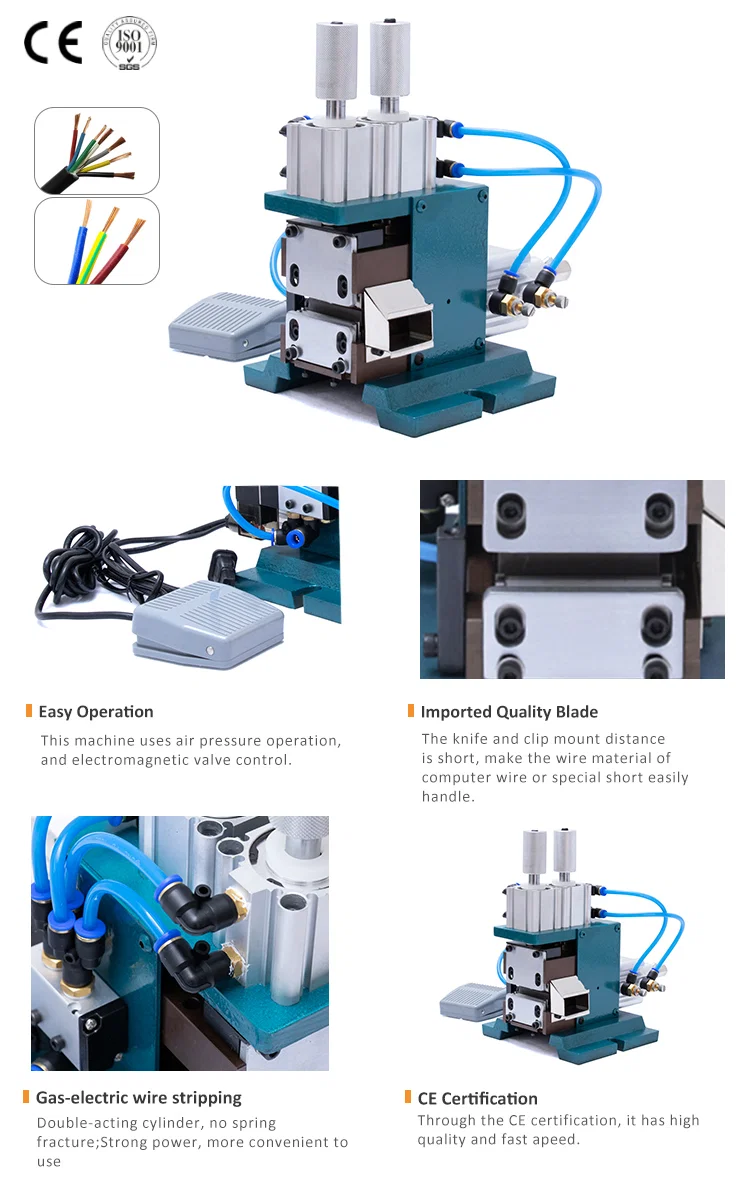
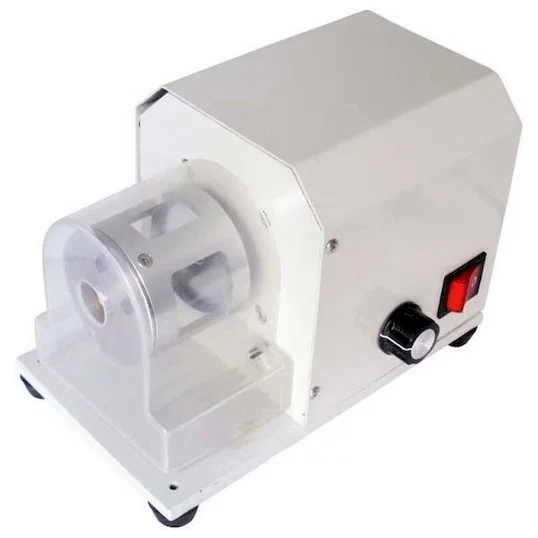
What is the primary function of the Pneumatic Wire Stripping Twisting Machine WPM-3F+T?
The WPM-3F+T is a pneumatic combo machine designed for industrial wire processing. Its primary function is to precisely strip insulation from wire ends and then twist the exposed strands into a tight, uniform bundle in a single, automated operation. This is essential for creating reliable terminations in cable harness manufacturing.
What are the key advantages of using a pneumatic (air-powered) machine like the WPM-3F+T?
As an air-powered machine, the WPM-3F+T offers several key advantages: it provides consistent, high torque for reliable twisting, operates at high speeds for increased productivity, requires minimal maintenance compared to some electric motors, and is inherently safe in environments where sparks from electric tools could be a hazard. Its durability ensures a long service life in demanding industrial settings.
What types and sizes of wire can the JINGWEI WPM-3F+T process?
The machine is engineered to handle a versatile range of industrial wires. It is typically suitable for processing stranded wires with a cross-sectional area from approximately 0.5 mm² to 6.0 mm² (AWG 20 to AWG 10). The precise adjustable stripping length and twist parameters allow it to accommodate various insulation types and wire gauges common in automotive, appliance, and control panel harness production.
Why should I choose JINGWEI as the manufacturer for this wire processing machine?
Choosing JINGWEI, an established manufacturer from China, means investing in a high-quality, cost-effective industrial solution. JINGWEI specializes in wire processing machinery, combining robust engineering with precision manufacturing. Their machines are known for reliability, ease of operation, and excellent after-sales support, providing a strong return on investment through improved efficiency and consistent output quality.
How does the WPM-3F+T improve efficiency in cable harness production?
The WPM-3F+T significantly boosts efficiency by combining two critical processes—stripping and twisting—into one fast, automated cycle. This eliminates manual handling between steps, reduces labor costs, and minimizes errors. The machine ensures every termination is uniform, which enhances the electrical reliability of the final harness and speeds up subsequent assembly stages like crimping or soldering.
 English
 Chinese
 Russian
 French
 Spanish
 Arabic
 German
 Dutch
Dutch Portuguese
 Italian
 Turkish
 Korean
 Japanese
 Thai
Thai Czech
Czech Traditional Chinese
 Indonesian
 Vietnamese
 Hungarian
 Malay
Malay Swedish
 Finnish
 Danish
 Norwegian
 Polish
 Greek
Greek