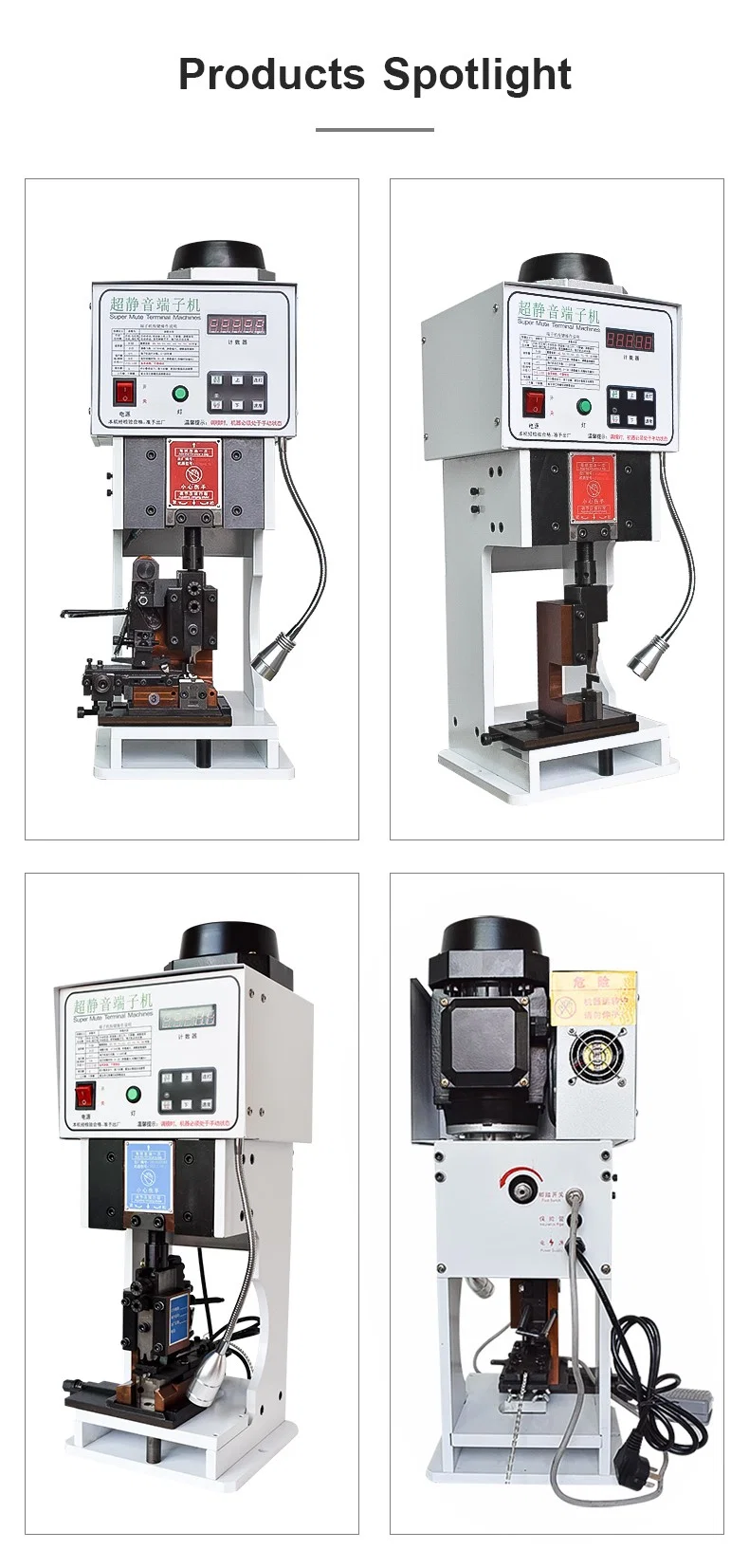
JW-CM10 is a semi-automatic wire terminal crimping machine built on a servo-driven press head with a computer touch panel. Cutting, single- and double-end crimping, stripping and twisting run as one programmed sequence, and the shortest wire the machine will produce is 12 mm. Crimp force and shut height follow the applicator fitted to the ram, so the unit is specified by process and wire range rather than by a single tonnage figure.
On the cam-and-clutch presses this machine replaces, stroke, crimp height and stopping point were set by mechanical adjustment, and a worn brake changed the crimp between shifts. The servo head positions the ram electronically, so a stored setting is recalled when the job returns to the line instead of being dialled in again. The same drive loads the motor only during the working stroke, which is where the power-saving and low-noise claims of the model come from.
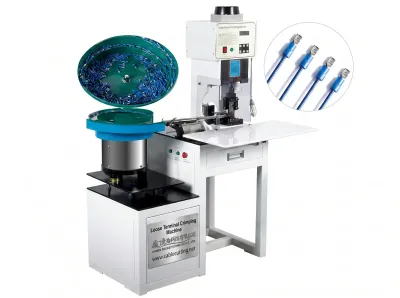
Inside this group the JW-CM10 is the process machine rather than a plain press. The WPM-160 crimps loose terminals from a vibration bowl but does not cut, strip or twist; the JW-CM10 takes strip-fed terminals on OTP straight or transverse molds and turns out a finished lead in one cycle. Specify the JW-CM10 where cut length and strip length have to be held, and the WPM-160 where terminals arrive loose in bulk.
Key Features
1. Crimp force and stroke are set numerically on the servo head and by the applicator in use; the frame carries no separate tonnage rating, so a job is recalled by program rather than re-set by hand
2. Servo drive with a computer touch panel runs cutting, single- or double-end crimping, stripping and twisting in one cycle, down to a 12 mm finished wire
3. Super-silence, power-saving build: the motor is loaded only during the working stroke, which holds sound level and consumption down on continuous bench work
4. OTP straight molds and transverse molds both mount on the ram, covering end-feed and side-feed terminal strip without a second press
5. Wire, terminal, knot and air-pressure detection stop the cycle on a fault, and terminal waste drops into a collection box under the applicator
6. Applicator guard carries a keep-hands-clear label, and a flexible work lamp lights the die window for setup and first-off inspection
Technical Specifications
| Parameter | Specification |
|---|
| Model | JW-CM10 |
|---|
| Machine type | Semi-automatic wire terminal crimping machine |
|---|
| Control system | Computer touch panel |
|---|
| Drive system | Servo control |
|---|
| Functions | Wire cutting, single/double-end crimping, stripping, twisting |
|---|
| Minimum wire length | 12 mm |
|---|
| Detection functions | Wire, terminal, knot, air pressure |
|---|
| Mold types | OTP straight mold, transverse mold |
|---|
| Waste handling | Automatic terminal waste collection |
|---|
Applications
— Automotive wire harness lines: single- and double-end crimping of strip-fed terminals on cut lengths from 12 mm upward
— Home appliance harnesses: stripping and twisting paired with crimping in one pass for internal wiring sets
— Industrial control panels: ferrules and ring terminals crimped onto hook-up wire ahead of assembly
— Electronics and AV cable assembly: short cut lengths where cut and strip accuracy decide the fit
— Harness shops running repeat jobs: stored programs recalled by terminal and wire combination
 English
 Chinese
 Russian
 French
 Spanish
 Arabic
 German
 Dutch
 Portuguese
 Italian
 Turkish
 Korean
 Japanese
 Thai
 Czech
 Traditional Chinese
 Indonesian
 Vietnamese
 Hungarian
 Malay
 Swedish
 Finnish
 Danish
 Norwegian
 Polish
 Greek